Roof Replacement Cost in St. Louis, MO (2026)
Planning a new roof in St. Louis, MO starts with a fair sense of the numbers. This guide sets out the published cost rows we use, explains why two prices for the same house can be far apart, and shows what a sound written estimate should list before you sign anything.
Not sure if we cover your area? Check now ↓
Request Your Estimate
Four quick fields. We read every request and set up the roofer's visit.
The roof visit, the written estimate and any work that follows come from a local roofing company, not from Roof Replacement St. Louis MO. See our Referral Marketing Disclosure.
Typical Cost by Roof Type
The figures below come from home-cost websites. They are published ranges, not our prices, and not a bid or a quote. Only the roofer who measures your roof can put a real price in writing. The two St. Louis rows are 2024 figures for the St. Louis area, while the three Missouri rows are 2026 figures for the whole state.
| Cost row | Figure | Source (year) |
|---|---|---|
| Missouri whole roof, average | about $6,931 (range about $5,392 to $17,837) | This Old House (2026) |
| Missouri asphalt shingles, per sq ft | about $4.59 | This Old House (2026) |
| St. Louis asphalt shingles, per sq ft installed | about $5 to $8 | HomeBlue (2024) |
| St. Louis metal roofing, per sq ft installed | about $8 to $13 | HomeBlue (2024) |
| Missouri slate, per sq ft | about $15.19 | This Old House (2026) |
The same source puts Missouri clay tile at about $15.12 per sq ft (This Old House, 2026). Per-square-foot figures apply to the roof surface, which runs larger than the floor plan once pitch and eaves are added.
A quick example helps. Take a 2,250-square-foot house with one and a half stories and a walkable pitch. Our calculator puts that roof near 1,850 square feet, so shingles at $4.59 to $8.00 a square foot come to roughly $8,500 to $14,800. Use that as a planning figure only.
Why Quotes Differ
Two houses on the same block can get prices thousands of dollars apart. Census survey data puts the median City home at about 1938, and older roofs tend to hide more surprises. These are the usual reasons a number moves.
- Surface area. Most of the price follows the square footage of roof, so a larger roof costs more in close step.
- Steep pitch and fancy shapes. Steep Victorian roofs, dormers and turrets slow the crew and need more cutting and flashing. They push a job toward the upper end of the range.
- Old layers underneath. If more than one old roof is still in place, each layer adds tear-off time and disposal.
- Decking condition. Rotted boards often stay hidden until the old roof comes off. Replacing them is a possible extra, so ask how the contract prices it.
- Slate, tile and flat sections. The City's Second Empire houses had mansard roofs covered in slate, and those materials sit at the top of the scale. A flat or low-slope roof is priced by the roofer after a look.
- Permits and historic review. In the City, a permit applies only to a new material or to more than 25% new sheathing. City historic districts and landmarks add Cultural Resources Office review, and County cities set their own rules.
- Subdivision rules. If your subdivision has HOA or trustee rules on color or material, the allowed product can add a step.
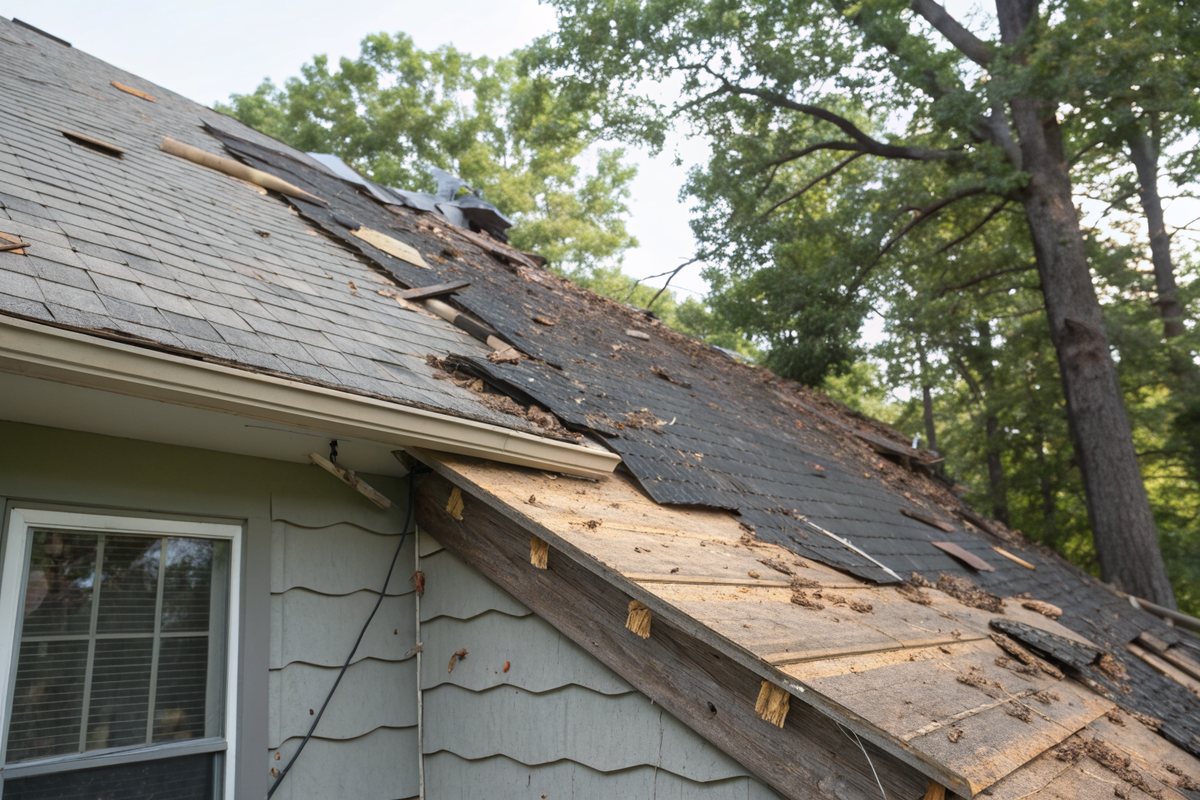
Inside a Roof Estimate
The written estimate comes from the roofer after a visit, not from us. A single line that says "new roof" tells you very little. Ask for the job broken into parts so two offers can be laid side by side.
A clear estimate names the shingle or panel and its grade, the underlayment, the drip edge, flashing, pipe boots and vents. It covers tear-off, haul-away and cleanup, and states a per-sheet price for any decking. It also gives a payment schedule, a start window, and both the manufacturer and labor warranties, plus who registers the manufacturer warranty.
Missouri has no state roofing license, so check what your own city asks for. Inside the City of St. Louis, each contractor must carry a City graduated business license; the License Collector's office at City Hall can confirm it. Ask to see liability and workers' comp papers, and get a local address plus a few past customers. Walk away from a cash-only deal or a demand for the whole price up front.
Claims, Deductibles and Depreciation
If a storm caused the damage, your homeowners policy may cover some of the bill. Your insurance company decides the claim. A roofer can photograph the damage and write an estimate you can share, but a roofer can't negotiate the claim for you. Only a licensed public adjuster can represent you.
Policies pay for an older roof in different ways, so ask your insurer how yours pays before work is set. Your deductible is yours to pay. Missouri bars roofers from paying or rebating any part of it, and from handing you gifts or credits of any kind.
There is one more protection. Got a written denial for part or all of the claim? Missouri then gives you five business days, ending at midnight, to cancel an insurance-paid roof contract. The details are on our page about Missouri roofing rules.
Move From Estimate to Quote
The calculator below turns your home's size, height and pitch into a rough range. When you want a firm number, send us a request. A local roofer measures the roof, looks at the deck from the attic and writes the quote down for you. There is no cost to send a request. Not sure a new roof is needed yet? Try the repair or replace quiz.